

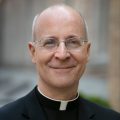
 Cardinal William Levada, the prefect of the Congregation of the Doctrine of the Faith, has responded to articles criticizing Pope Benedict XVI Ithen Cardinal Joseph Ratzinger) for his handling of the case of an abusive priest in Milwaukee, particularly as detailed in The New York Times last week in a rare interview with the Times here, and an extraordinary and excoriating 2,400-word commentary, in which he calls the Times’ coverage, by Laurie Goodstein, “deficient by any reasonable standards of fairness.”
As a full-time member of the Roman Curia, the governing structure that carries out the Holy See’s tasks, I do not have time to deal with the Times’s subsequent almost daily articles by Rachel Donadio and others, much less with Maureen Dowd’s silly parroting of Goodstein’s “disturbing report.” But about a man with and for whom I have the privilege of working, as his “successor” Prefect, a pope whose encyclicals on love and hope and economic virtue have both surprised us and made us think, whose weekly catecheses and Holy Week homilies inspire us, and yes, whose pro-active work to help the Church deal effectively with the sexual abuse of minors continues to enable us today, I ask the Times to reconsider its attack mode about Pope Benedict XVI and give the world a more balanced view of a leader it can and should count on.
Laurie Goodstein has, in effect, replied with this article outlining the Times’s coverage of the case in question.
The case of the Rev. Lawrence C. Murphy, accused of molesting as many as 200 deaf boys at a school in Wisconsin, stands out among the cases of sexual abuse by Catholic priests because of the number and vulnerability of the victims, and the availability of documents revealing how church officials handled the matter. Father Murphy died in 1998, still a priest, despite documents showing that a priest had informed church officials as early as the mid-1950s that deaf children had complained that Father Murphy was molesting them. The police and prosecutors in Wisconsin were also informed by the victims and their advocates, but failed to act. The documents show that during the mid-1990s, Archbishop Rembert G. Weakland of Milwaukee, facing the threat of lawsuits and hearing wrenching testimony from deaf adults who said they had been abused by Father Murphy, concluded that Father Murphy should be removed from the priesthood.

 Politics
 Faith
Faith Culture
 Vatican
 Scripture
 Podcasts